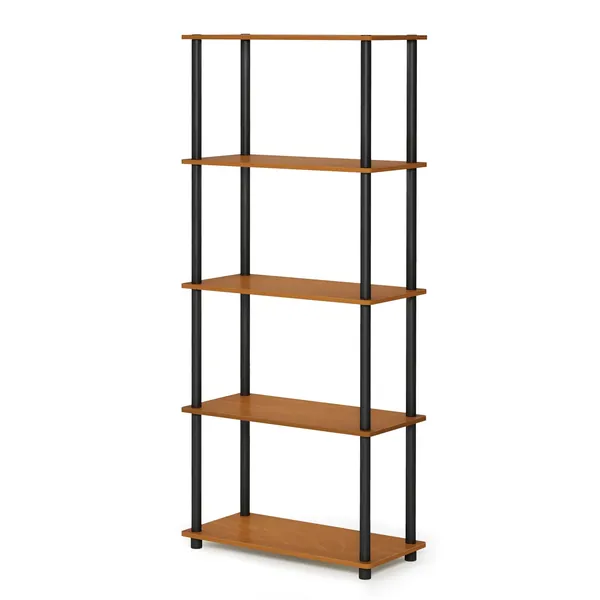
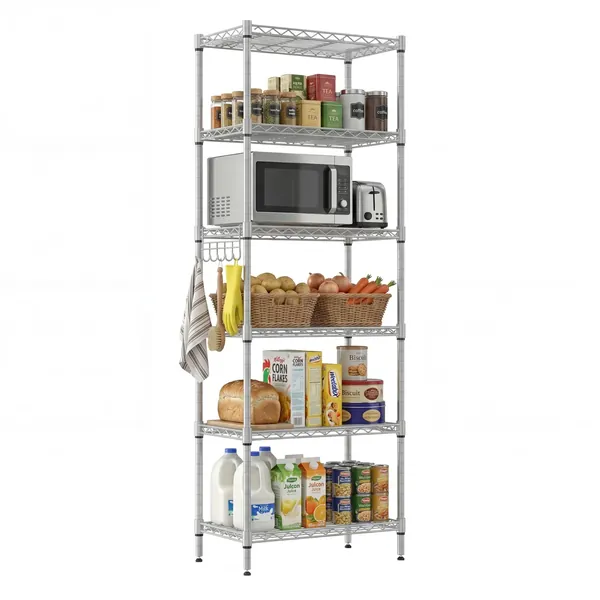
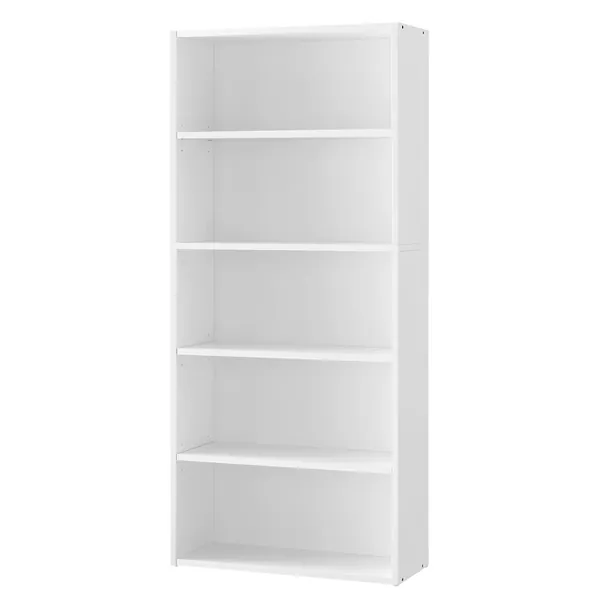
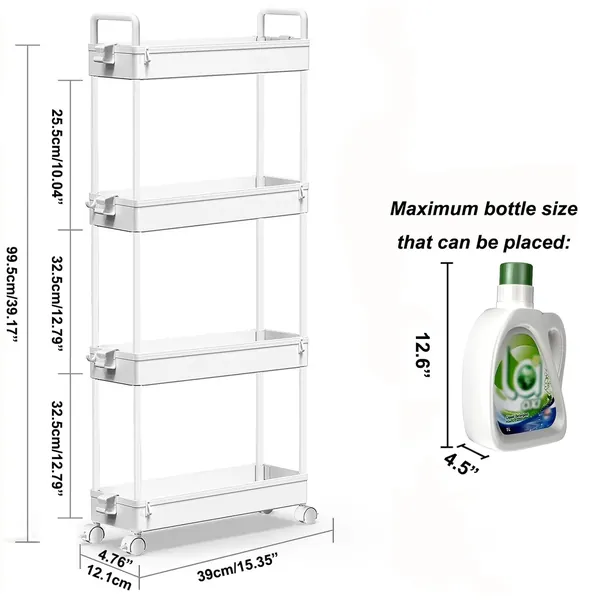
What to look at before buying narrow shelving
What you are buying is a floor multiplier. Six tiers on
a 54 by 29 cm base turn 1,566 cm² of floor into 9,396 cm² of
surface to put things on. That is the number that matters, and it is the
one we work out on every listing. The more tiers over the same base, the
harder the floor you gave up is working.
Depth decides whether it fits at all. Measure the gap
before you look at anything else. At 24 cm a unit stands beside a door or
between the sofa and the wall; at 40 cm it is a piece of furniture you have
to find a place for. Check the doorway too: a tall unit that arrives built
sometimes will not turn into a bathroom, which usually has the narrowest
door in the flat.
The load is the unpleasant surprise. Here the spread is
enormous and almost nobody checks it: 6.8 kg a shelf at one end, 250 kg
over the whole unit at the other. Six kilos is towels, jars, a few
paperbacks. It is not a row of hardbacks or a stack of pans. And one of the
four publishes no figure at all, which tells you something in itself.
The material follows the room. Particleboard looks like
furniture and swells in damp. Powder-coated steel takes a bathroom, a
utility room or a garage and looks like what it is. Wire shelves carry the
most and drop anything small through the gaps unless you line them.
And the anti-tip bracket is not optional. Anything over
a metre and a half on a narrow base needs fixing to the wall, especially
with children in the house. The good ones include the kit; if yours does
not, buy one.