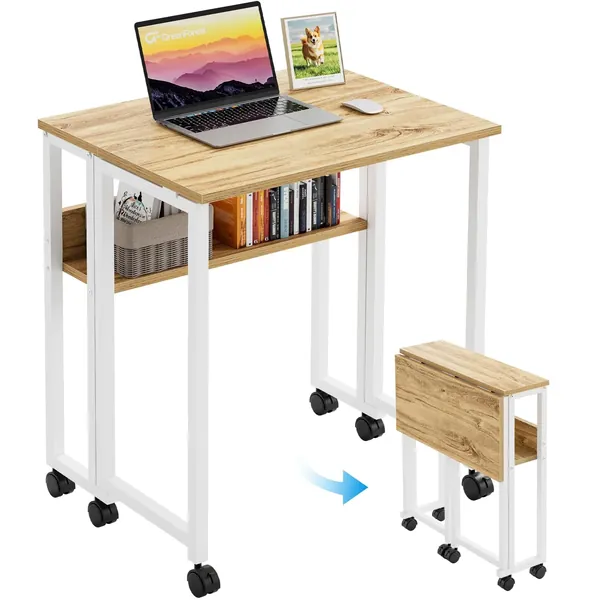
What to look at before buying a folding desk
Depth decides whether you work comfortably. It is the
measurement people ignore most and notice most. At 40 cm you manage fine
with a laptop; the moment you add an external monitor the screen sits on
top of the keyboard and your neck pays for it. From 45 cm upwards that
stops being a problem, and the deepest here runs to 56 cm. For two
screens you want the width as much as the depth: 120 cm across is where a
second monitor stops being a squeeze.
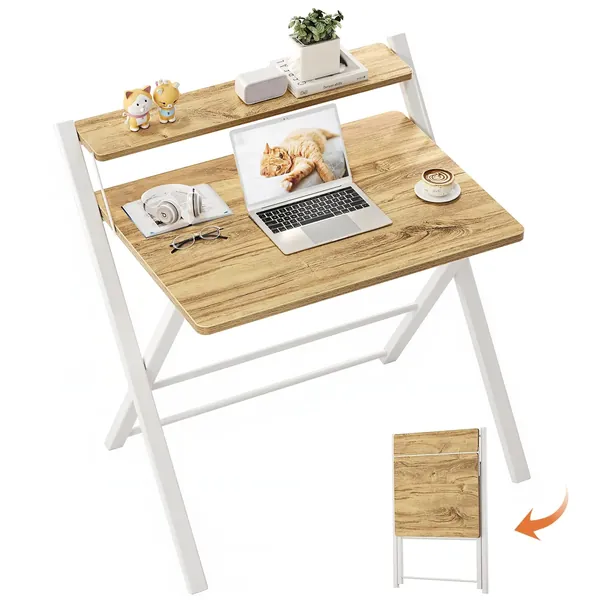
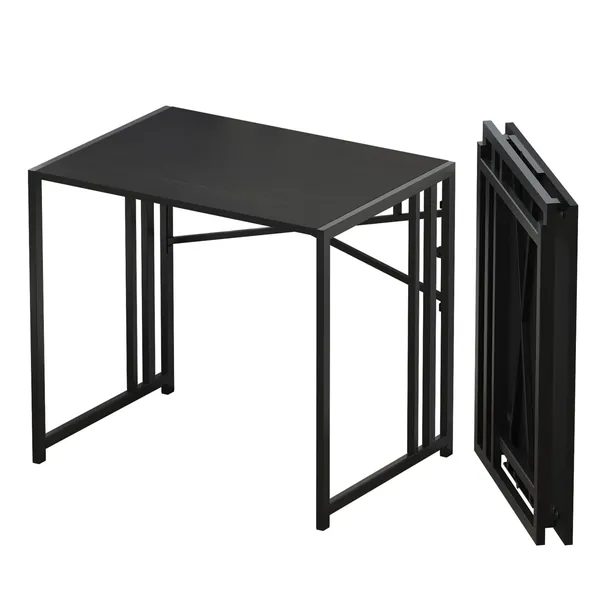
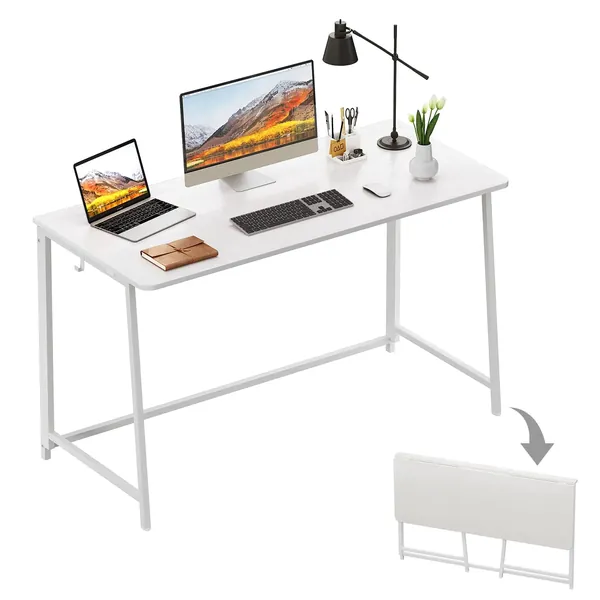
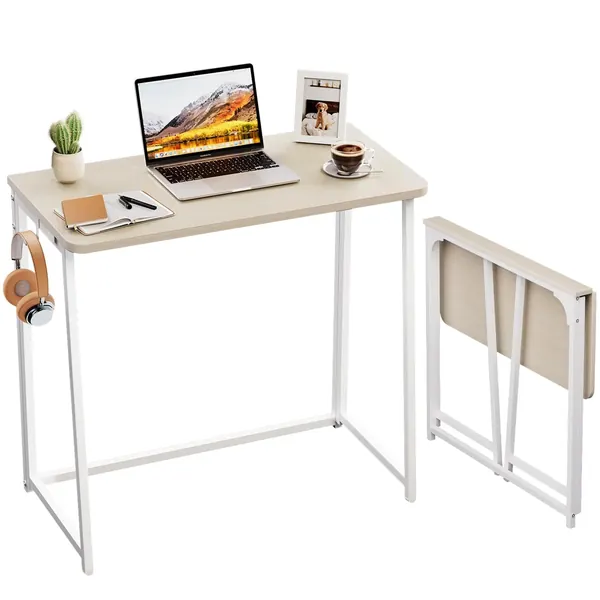
Folded thickness decides where you store it. Open,
these run from 3,150 to 6,000 cm² of surface, so they are not all the
same proposition. What separates them when they are put away is the other
number, and four of the five publish it: 6.9, 7, 7 and 20 cm. That is not a
small spread. Seven centimetres slides behind a door; twenty is a panel you
have to find a home for. The one that does not publish it is marked as
estimated, because guessing quietly is worse than admitting the gap.
If you have to screw it together, you will never fold it.
It sounds like an exaggeration and it is not. A ready-assembled desk opens
out in seconds, and that is exactly why it gets folded every day; one that
needs building ends up parked in a corner for good. Two of these five need
no assembly at all. If your plan is to get the room back every evening,
that stops being a convenience and becomes the main requirement.
Maximum load is almost never the limit. Only one of the
five publishes a figure, and it is 81.6 kg, far more than a laptop, a
monitor and a few books will ever ask of it. The real limit is
lateral stability: most folding desks move a little if you lean on
them hard, and that is what comes up most in the reviews. A thick metal
frame helps a great deal more than a high load rating.