What to look at before buying a bed that saves space
You are buying blind on one figure, and you should know
it. It is the problem of the whole category: no maker
publishes how many litres its bed holds. Not one. In every other
section of this site we can tell you how much goes in; here we cannot,
because the number does not exist. We leave it empty rather than estimate
it, and if a seller quotes you a figure, ask where it came from.
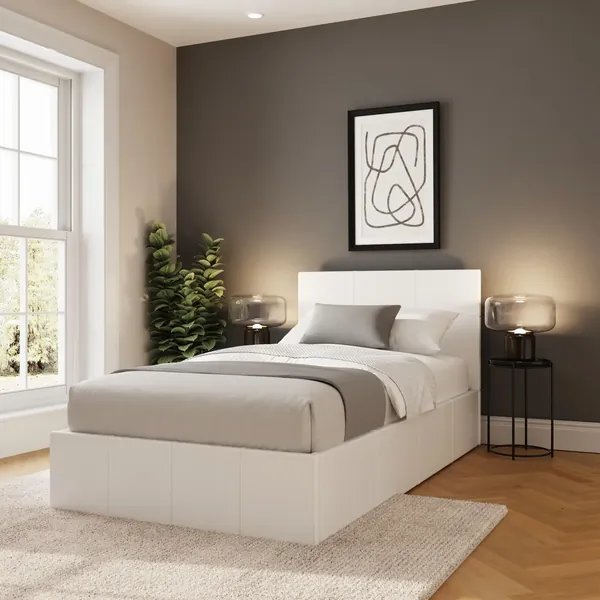
Storage under the sleeper and a bed that disappears are
different purchases. A base that lifts uses the volume under a bed
you were going to have anyway, and it is the answer when the problem is
that your own room has no wardrobe. A bed that folds answers the other
question: where does a guest sleep when there is no guest room. Neither is
better; they solve opposite problems.
A lifting base needs room to lift. It is the complaint
that turns up most in reviews of this kind of bed. A side-opening base
needs clear floor down the side; a foot-opening one needs it at the end. In
a small bedroom, where the bed is usually against a wall or wedged between
two, that decides which one you can actually use. Measure both before
choosing.
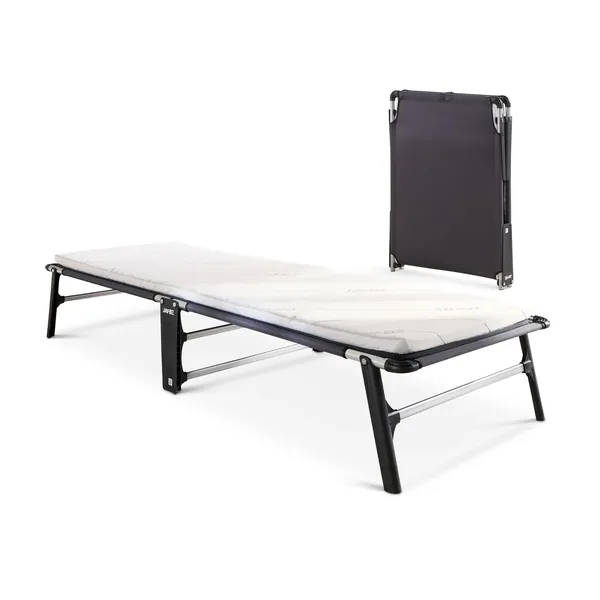
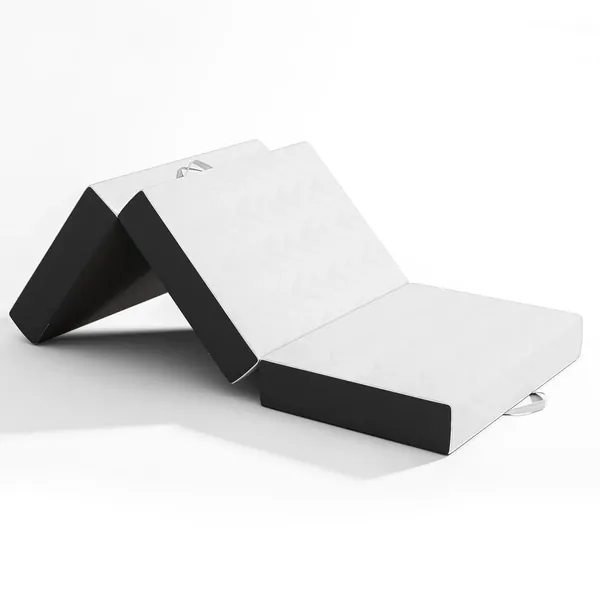
And ask what it measures folded, because most will not
say. Of the four here, only one publishes it, and that one folds
to 10 cm. Everything else asks you to guess whether it will fit your
cupboard. Where the figure is missing we leave the space score empty rather
than work it out from the open size, which would be a guess with a number
on it.
A note on lifting bases, because it differs by country.
In Spain we do not recommend a single one: they sit between 3.3 and 3.9 out
of 5 on Amazon.es, with repeated complaints about transit damage and
hardware failing. Here that is not what the ratings say, so there is one in
this selection. Same kind of furniture, different market.